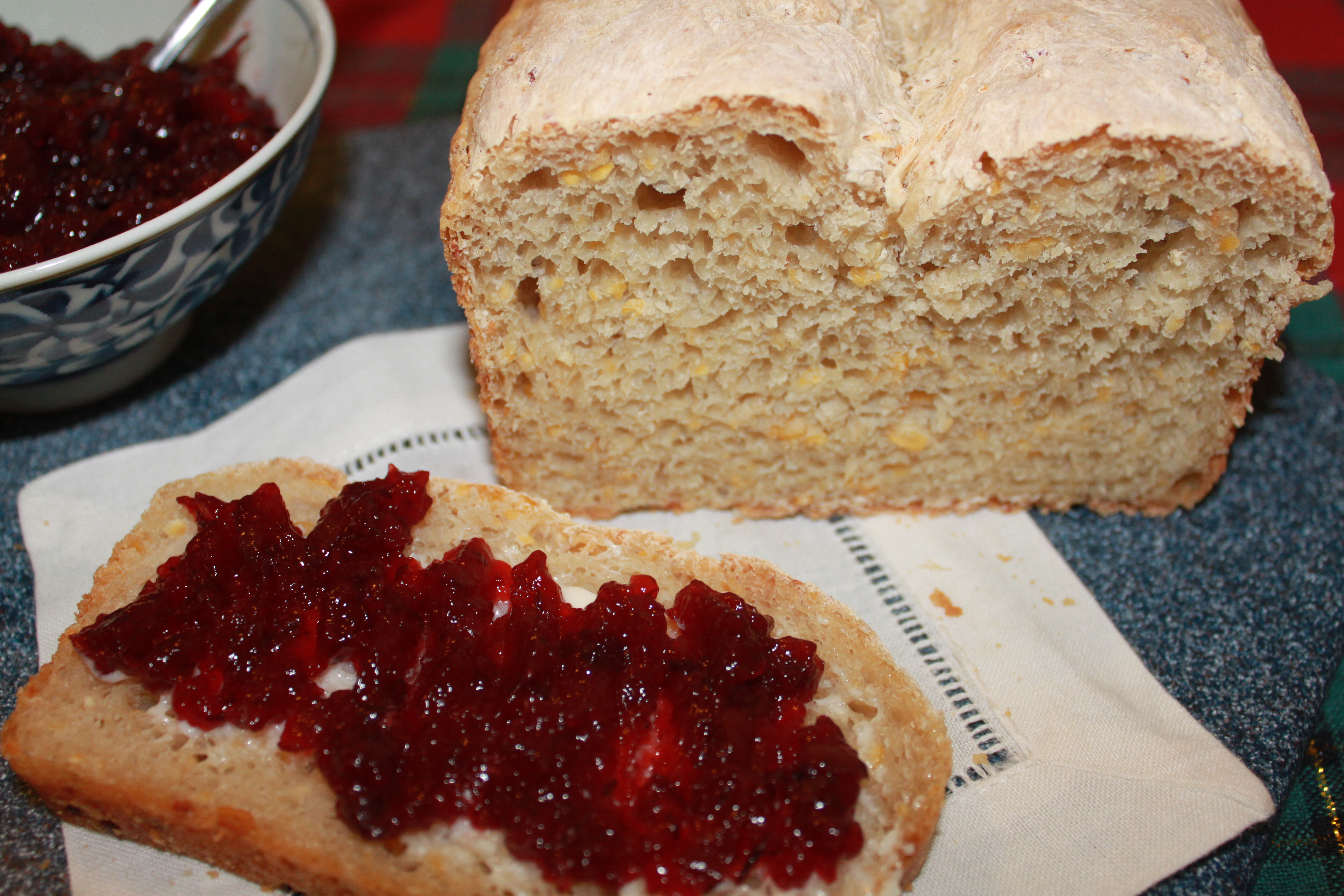
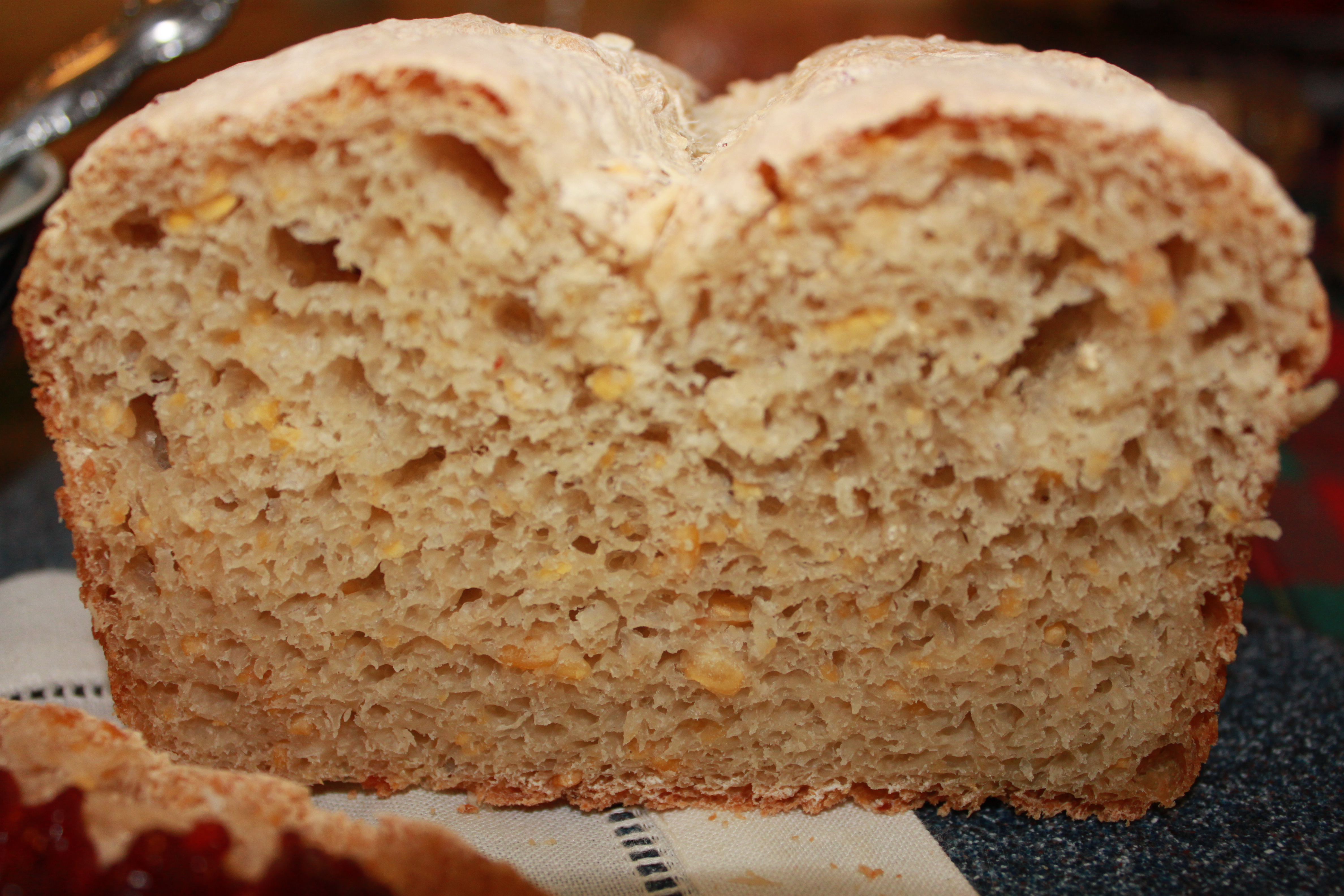
 Last month, I decided that it’s time to learn how to make bread and the first bread that popped into my mind was a sandwich bread that I could take to school. School started last week and just in time I made this garbanzo bread. It’s just a little different from your regular sandwich bread because it has mashed garbanzo beans, or chickpeas, inside. To my surprise the bread turned out to be on the mild side. I was expecting to taste the garbanzo beans but I wouldn’t be able to tell they were there if I didn’t make the bread myself. That makes the bread healthy and very versatile. You can eat it for breakfast with jam or make a meaty sandwich for lunch. I bet it tastes great with peanut butter even.
Garbanzo bread it a great upgrade to the plain white bread. It’s a little more work with the garbanzo beans so next time I will make it I will double the recipe. It keeps well but there really is nothing better than that first crunchy bite of a freshly baked bread. Enjoy!
Garbanzo Bread (The Laurel’s Kitchen Bread Book):
Cover 1 cup dry garbanzo beans with boiling water and soak overnight or for a couple of hours. In a medium pot filled with a quart of water cook the garbanzo beans until soft. Drain, reserving the cooking liquid. Mash and cool the beans.
Dissolve 2 tsp. active dry yeast in 1/2 cup warm water. Combine 5 cups bread flour and 2 1/2 tsp. salt in the bowl of a stand mixer fitted with the whisk attachment. Mix for 30 seconds. Add the mashed garbanzo beans and mix to combine. Dissolve 2 tbsp. agave nectar in 2 cups of the garbanzo beans cooking liquid (add water to cooking liquid if it comes out to be less than 2 cups). Pour that and the yeast solution into a well in the center of the flour. Switch the whisk attachment to a paddle attachment and knead on low speed. You may need to stop the mixer and scrape the sides of the bowl. Knead well, 10 to 15 minutes, until smooth.
Form the dough into a ball and place it in a large bowl. Cover and keep in a warm, draft-free place. After about an hour and a half, gently poke the center of the dough about 1/2 inch deep with your wet finger. If the hole does not fill in at all, or if the dough sighs, it is ready for the next step. Press flat, form into a smooth round, and let the dough rise once more. The second rising will take about half as much time as the first.
Press the dough flat and divide in two. Round and let relax, then deflate and shape into loaves and put in loaf pans. Let them rise in a warm place until the dough slowly returns a gently made fingerprint. Bake 45 minutes to an hour at 350 F.

 cravingsweetskitchen