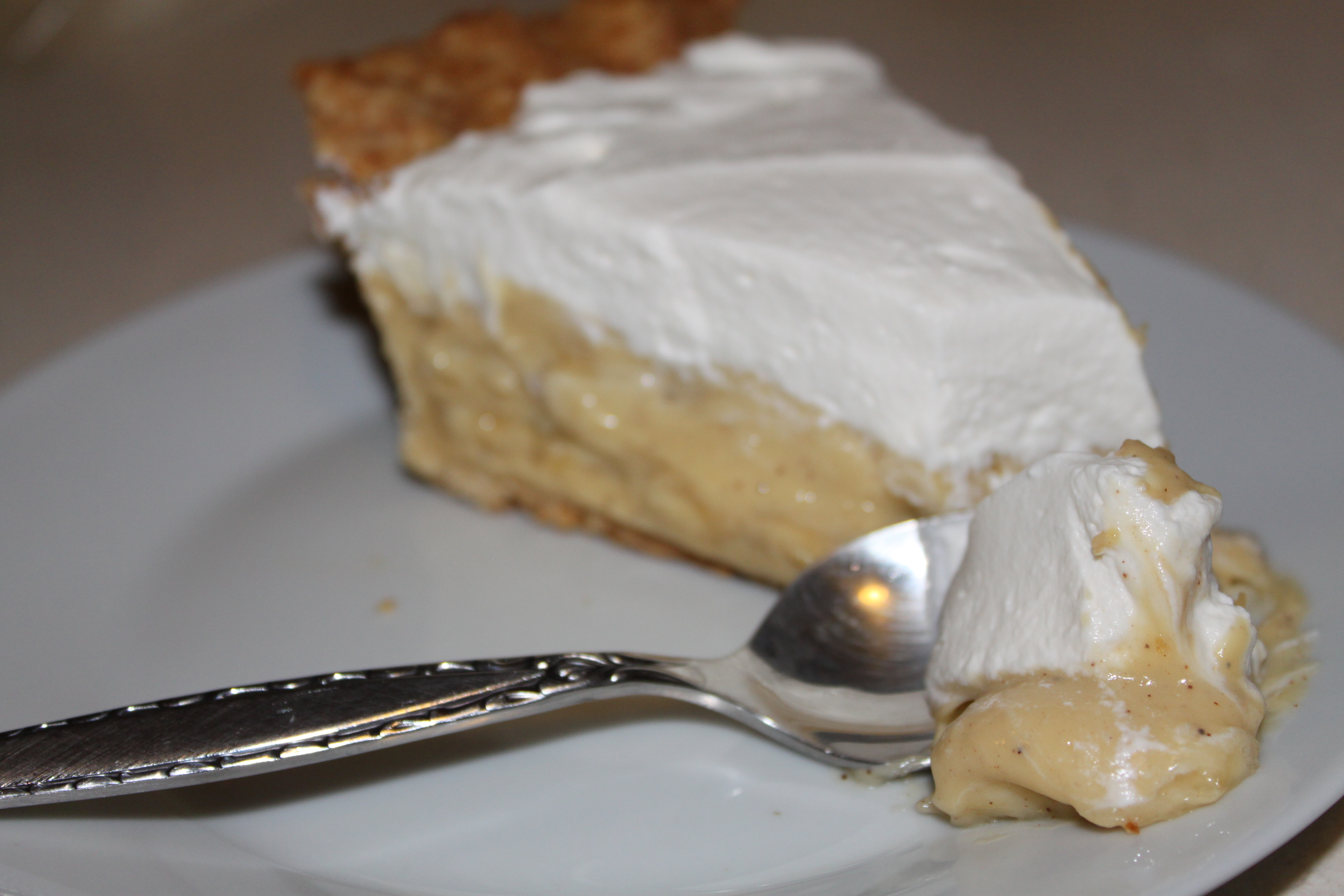
If it weren’t for this banana cream pie recipe I would not have known how much I love bananas in pies. Thank you Dorie Greenspan ,once again you had shown me what I am missing in my life.
So this was the first time I made banana cream pie and it was one of those moments in my baking career that reminded me why I love to bake so much. If like me you have had one to many disasters in the kitchen you learned to cherish the beautiful moments where you feel like a pastry superstar. I enjoyed making this pie so much that I cannot wait to get in the kitchen and make this dessert again. Banana cream pie, we will meet again- preferably in the summer when I am craving a cooled, heavy-on-the-whipped-cream dessert.
Banana Cream Pie (from Dorie Greenspan’s Baking: From My Home to Yours)
ingredients:
For a 9-inch Single Crust:
1 ½ cups all-purpose flour
2 tablespoons sugar
¾ teaspoon salt
1 ¼ sticks (10 tablespoons) very cold (frozen is fine) unsalted butter, cut into
tablespoon-size pieces
2 ½ tablespoons very cold (frozen is even better) vegetable shortening, cut into 2 pieces
About ¼ cup ice water
Directions:
Put the flour, sugar, and salt in a food processor fitted with a metal blade; pulse just to combine the ingredients. Drop in the butter and shortening and pulse only until the butter and shortening are cut into the flour. Don’t overdo the mixing – what you’re aiming for is to have some pieces the size of fat green peas and others the size of barley. Pulsing the machine on and off, gradually add about 3 tablespoons of water – add a little water and pulse once, add some more water, pulse again and keep going that way. Then use a few long pulses to get the water into the flour. If, after a dozen or so pulses, the dough doesn’t look evenly moistened or form soft curds, pulse in as much of the remaining water as necessary, or even a few drops more, to get a dough that will stick together when pinched. Big pieces of butter are fine. Scrape the dough of the work bowl and onto a work surface. Shape the dough for a single crust into a disk and wrap it. Refrigerate the dough for at least 1 hour before rolling. (If your ingredients were very cold and you worked quickly, though, you might be able to roll the dough immediately: the dough should as cold as if it had just come out of the fridge.)
To Roll Out the Dough: Have a buttered 9-inch pie plate at hand. You can roll the dough out on a floured surface or between sheets of wax paper or plastic wrap or in a rolling slipcover. (I usually roll this dough out on the floured counter.) If you’re on a counter, turn the dough over frequently and keep the counter floured. If you are rolling between paper, plastic or in a slipcover, make sure to turn the dough over often and to lift the paper, plastic or cover frequently so that it doesn’t roll into the dough and form creases. If you’ve got time, slide the rolled out dough into the fridge for about 20 minutes to rest and firm up.
Fit the dough into the pie plate and, using a pair of scissors, cut the excess dough to a ¼ to ½-inch overhand. Fold the dough under itself, so that it hands of the edge just a tad, and flute or pinch the crust to make a decorative edge. Alternatively, you can finish the crust by pressing it with the tines of a fork.
To Partially or Fully Bake a Single Crust: Refrigerate the crust while you preheat the oven to 400 degrees F. Butter the shiny side of a piece of aluminum foil, fit the foil, buttered side down, tightly against the crust and fill with dried beans or rice or pie weights. Put the pie plate on a baking sheet and bake the crust for 25 minutes. Carefully remove the foil and weights and, if the crust has puffed, press it down gently with the back of a spoon. For a partially baked crust, return the pie plate to the oven and bake for about 8 minutes more, or until the crust is very lightly colored. To fully bake the crust, bake until golden brown, about another 10 minutes. Transfer the pie plate to a rack and cool to room temperature before filling.
Storing: Well wrapped, the dough can be kept in the refrigerator for up to 5 days or frozen for up to 2 months. While the fully baked single crust can be packed airtight and frozen for up to 2 months, I prefer to freeze the unbaked crust in the pan, and to bake it directly from the freezer – it has a fresher flavor. Just add about 5 minutes to the baking time.
For the Custard:
2 cups whole milk
6 large egg yolks
½ cup (packed) light brown sugar, pressed through a sieve
1/3 cup cornstarch, sifted
½ teaspoon ground cinnamon
1/8 teaspoon freshly ground nutmeg
Pinch of salt
1 teaspoon pure vanilla extract
3 tablespoons cold unsalted butter, cut into bits
3 ripe but firm bananas
1 9-inch single crust,fully baked and cooled
For the Topping:
1 cup cold heavy cream
2 tablespoons confectioners’ sugar, sifted
1 teaspoon pure vanilla extract
2 tablespoons sour cream
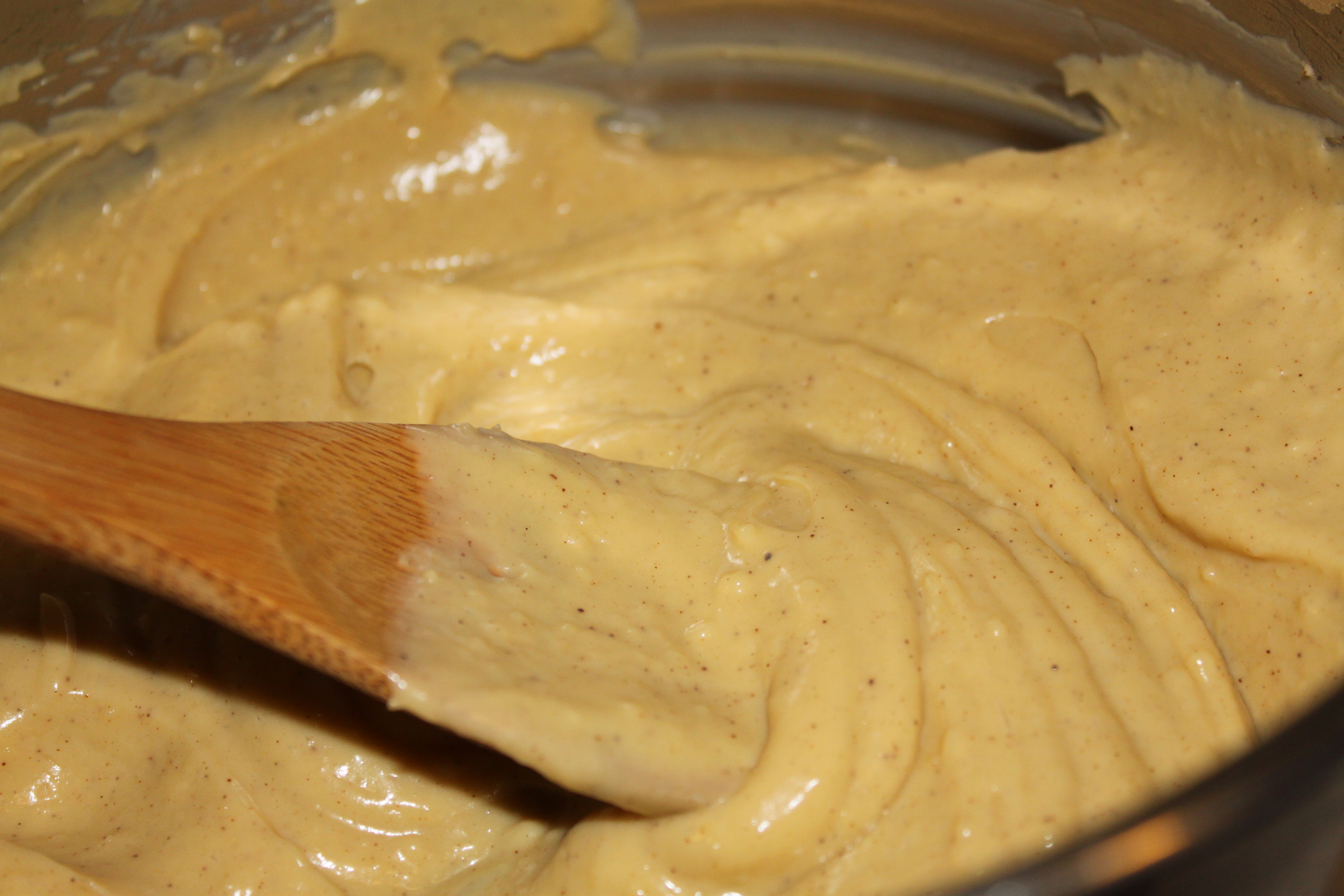
To Make the Custard: Bring the milk to a boil. Meanwhile, in a large heavy-bottomed saucepan, whisk the yolks together with the brown sugar, cornstarch, cinnamon, nutmeg and salt until well blended and thick. Whisking without stopping, drizzle in about ¼ cup of the hot milk – this will temper, or warm, the yolks so they won’t curdle – then, still whisking, add the remainder of the milk in a steady stream. Put the pan over medium heat and, whisking constantly (make sure to get into the edge of the pan), bring the mixture to a boil. Boil, still whisking, for 1 to 2 minutes before removing from the heat. Whisk in the vanilla extract. Let stand for 5 minutes, then whisk in the bits of butter, stirring until they are fully incorporated and the custard is smooth and silky. You can either press a piece of plastic wrap against the surface of the custard to create an airtight seal and refrigerate the custard until cold or, if you want to cool the custard quickly – as I always do – put the bowl into a large bowl filled with ice cubes and cold water and stir occasionally until the custard is thoroughly chilled, about 20 minutes. (If it’s more convenient, you can refrigerate the custard, tightly covered, for up to 3 days.)
When you are ready to assemble the pie, peel the bananas and cut them on a shallow diagonal into ¼-inch-thick slices. Whisk the cold custard vigorously to loosen it, and spread about one quarter of it over the bottom of the piecrust – it will be a thin layer. Top with half of the banana slices. Repeat, adding a thin layer of pastry cream and the remaining bananas, then smooth the rest of the pastry cream over the last layer bananas.
To Make the Topping: Working with a stand mixer fitted with the whisk attachment or with a hand mixer in a large bowl, beat the cream until it just starts to thicken. Beat in the confectioner’s sugar and vanilla and continue to beat until the cream holds firm peaks. Switch to a rubber spatula and gently fold in the sour cream.
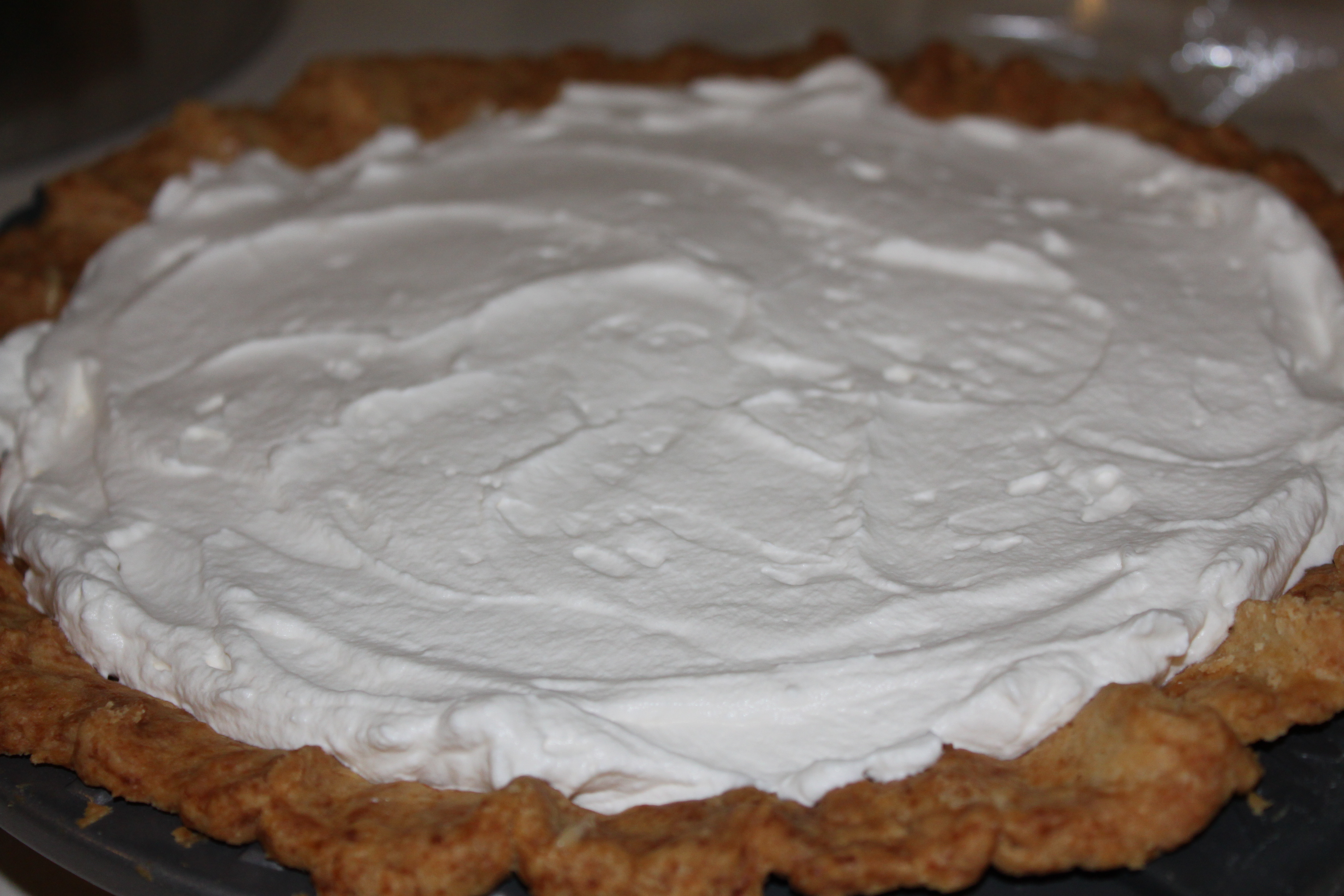
To Finish: Spoon the whipped cream over the filling and spread it evenly to the edges of the custard. Serve, or refrigerate until needed.
Serving: I like to serve the pie as soon as it is assembled, when the pastry cream and whipped cream are cold but not really chilled and the crust has not been refrigerated. I think this is when the pie is at its best –but, trust me, it will still be wonderful if you serve it from the fridge.
Servings: 8

 cravingsweetskitchen